
BigQuery ETL & Reverse ETL Pipelines
Engineered scalable Google BigQuery ETL workflows and automated reverse ETL data synchronization.
Operational & Architectural Constraints
A software organization had vast amounts of customer usage and transaction data sitting dormant in their data warehouse. Operational tools used by customer success, billing, and marketing teams were perpetually out of sync with warehouse metrics, forcing operators to execute manual CSV exports and spreadsheet reconciliations.
System Design & Implementation
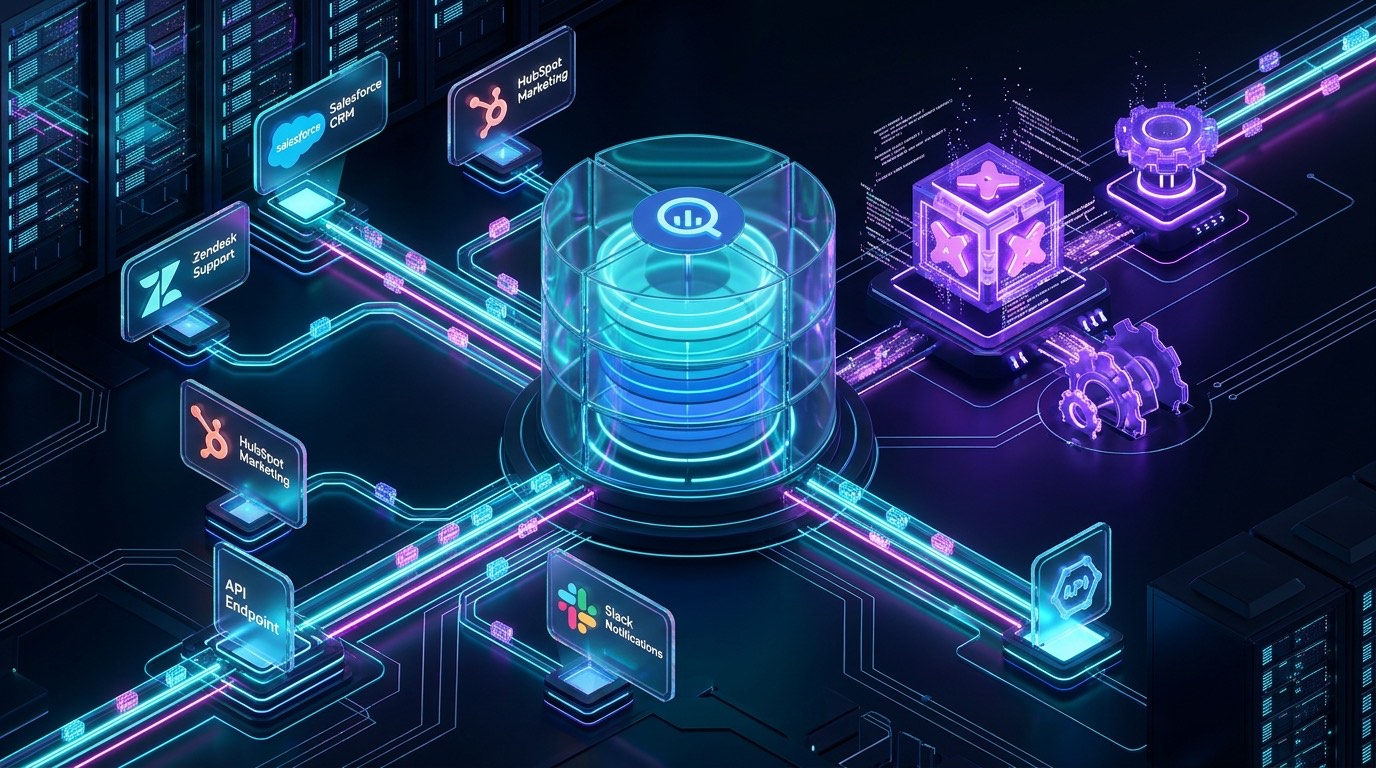
We developed an end-to-end data processing and reverse ETL infrastructure. First, raw application logs and transactional data were loaded into Google BigQuery using partitioned and clustered staging tables. Incremental transformations calculated user engagement scores, health metrics, and billing aggregates. A custom Reverse ETL pipeline built with Python and Cloud Functions then extracted computed metrics and pushed them into operational CRM and billing systems via rate-limited REST webhooks.
End-to-End System Data Flow
System Data Flow: BigQuery ETL & Reverse ETL Pipelines
Operational events land in BigQuery partitioned tables, dbt executes incremental aggregations, and Reverse ETL dispatchers broadcast synchronized metrics to third-party APIs.
Event streams land in ingestion-time partitioned tables with clustering on customer ID to minimize query scan costs.
Strict tenant isolation and atomic data boundaries enforced at both gateway validation and persistence/table tiers.
Every stage emits structured trace contexts (OpenTelemetry / correlation IDs) for distributed debugging and latency profiling.
Key Engineering Decisions
Partitioning by day and clustering by tenant/customer ID
Ensures queries only scan the relevant daily slice and customer partition, directly minimizing BigQuery on-demand analysis costs.
Requires careful query formulation using partition filter predicates.
Asynchronous Pub/Sub worker queue for reverse sync
Prevents third-party API rate limit spikes from blocking or failing the central pipeline run.
Introduces eventual consistency (typically under 2 minutes) for operational system updates.
Measured System Results & Stability Guarantees
In accordance with our engineering verification policy, we document verified technical benchmarks and architectural milestones rather than unverifiable marketing claims.
Data Engineering & Lakehouse Platforms
Explore our full deliverables, tech stack, and engagement models for this capability.
Facing a Similar Engineering Challenge?
Whether you need to decouple a monolith, deploy an Azure Databricks Medallion lakehouse, or author custom Airbyte connectors, let's evaluate your technical requirements.