
High-Performance SaaS Web Application
Built a responsive, type-safe SaaS application with Next.js, TypeScript, Tailwind CSS, and REST API integration.
Operational & Architectural Constraints
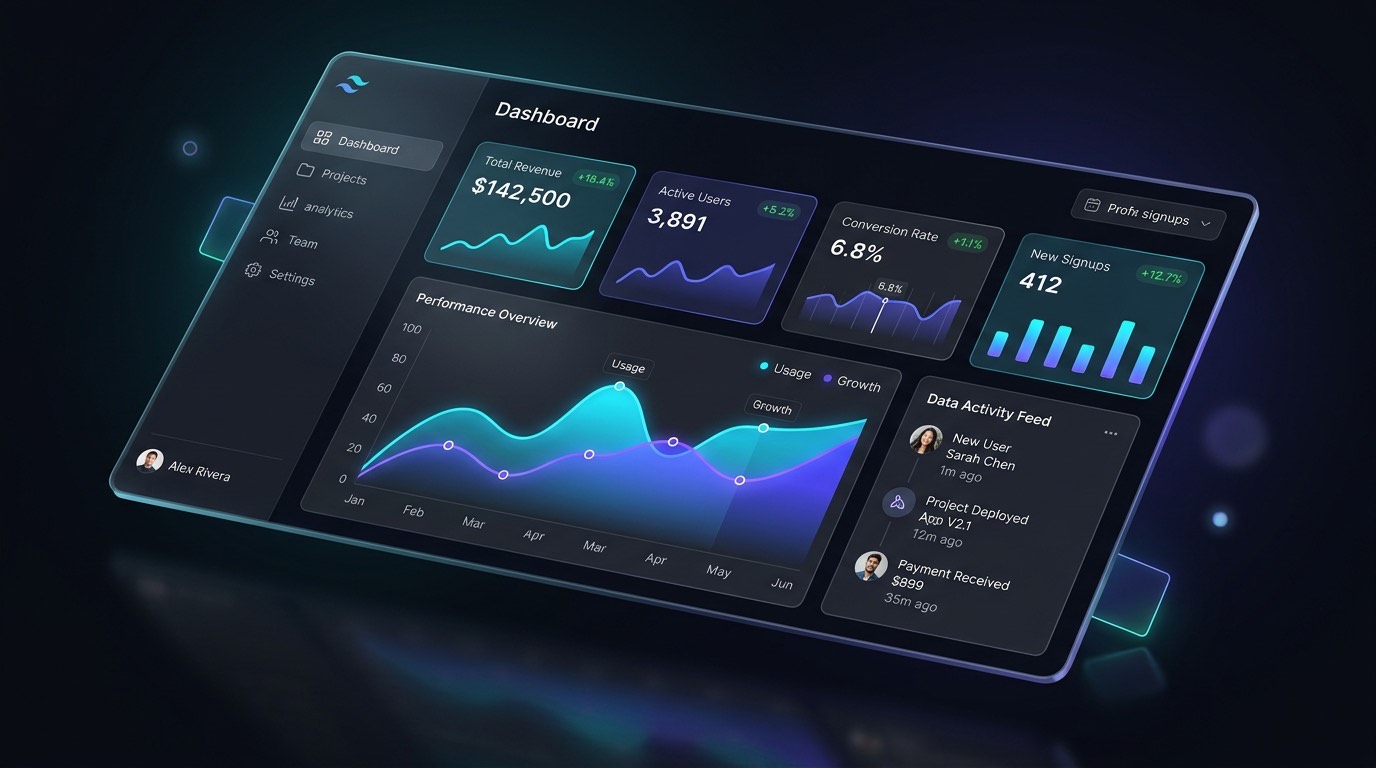
A digital products business required a complete full-stack web application with complex customer onboarding, role-based team management, real-time activity streams, and billing integration. Sluggish page transitions, inconsistent UI styling across features, and lack of end-to-end type validation between frontend and backend were impeding customer conversion.
System Design & Implementation
We engineered a full-stack web application leveraging Next.js App Router, React Server Components, TypeScript, and Tailwind CSS. We implemented a token-based design system ensuring visual fidelity across all viewports. Network requests were architected using React Query with optimistic UI updates and auto-generated TypeScript contracts derived from backend OpenAPI schemas, eliminating runtime type mismatches.
End-to-End System Data Flow
System Data Flow: High-Performance SaaS Web Application
Server Components render static shells with edge caching; client components manage optimistic state mutations against backend REST microservices.
Server-side renders page layouts, performing initial authentication checks and pre-fetching critical route data.
Strict tenant isolation and atomic data boundaries enforced at both gateway validation and persistence/table tiers.
Every stage emits structured trace contexts (OpenTelemetry / correlation IDs) for distributed debugging and latency profiling.
Key Engineering Decisions
Server Components with client-side leaf interaction
Reduced JavaScript bundle sent to the client by over 40%, yielding superior First Contentful Paint times.
Requires strict discipline regarding where client hooks (`useState`, `useEffect`) are instantiated.
Automated TypeScript SDK generation from OpenAPI specs
Prevented silent breaking changes when backend API payloads were updated or refactored.
Build pipeline must incorporate spec generation step prior to client build.
Measured System Results & Stability Guarantees
In accordance with our engineering verification policy, we document verified technical benchmarks and architectural milestones rather than unverifiable marketing claims.
Frontend & Full-Stack Solutions
Explore our full deliverables, tech stack, and engagement models for this capability.
Facing a Similar Engineering Challenge?
Whether you need to decouple a monolith, deploy an Azure Databricks Medallion lakehouse, or author custom Airbyte connectors, let's evaluate your technical requirements.